See load spikes before they become problems
Every session becomes a number. AthleteArc turns session RPE into training load and tracks the acute:chronic workload ratio, monotony and strain for every player — with thresholds adjusted for age.
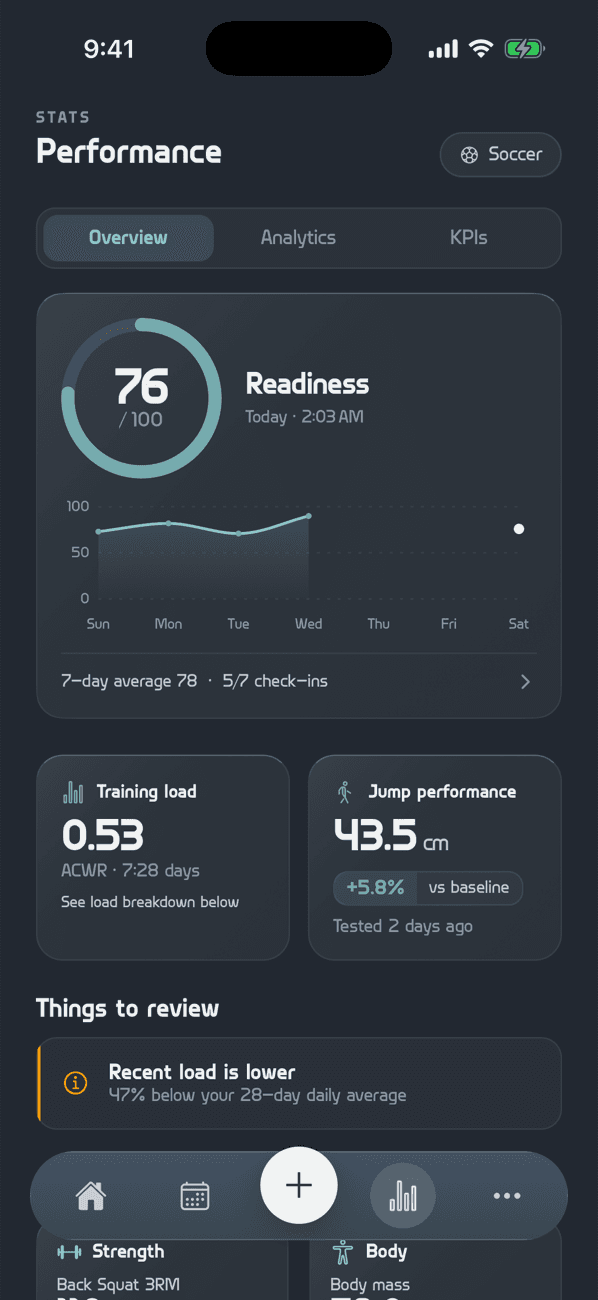
The simplest load measure that works
After training, players rate how hard the session felt and how long it lasted. That is session RPE — the method sports scientists have used for decades, and the one every team can afford.
It happens inside the evening check-in, so load data arrives with the rest of the day’s wellness data instead of in a separate form nobody fills in.
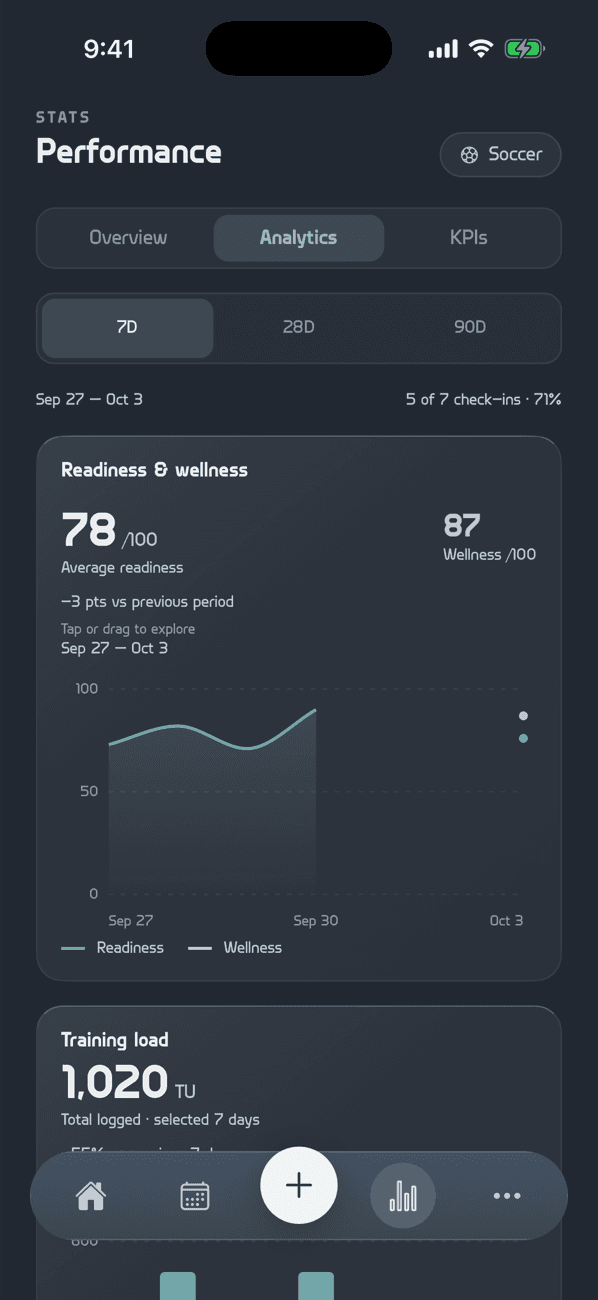
Team load against wellness, day by day
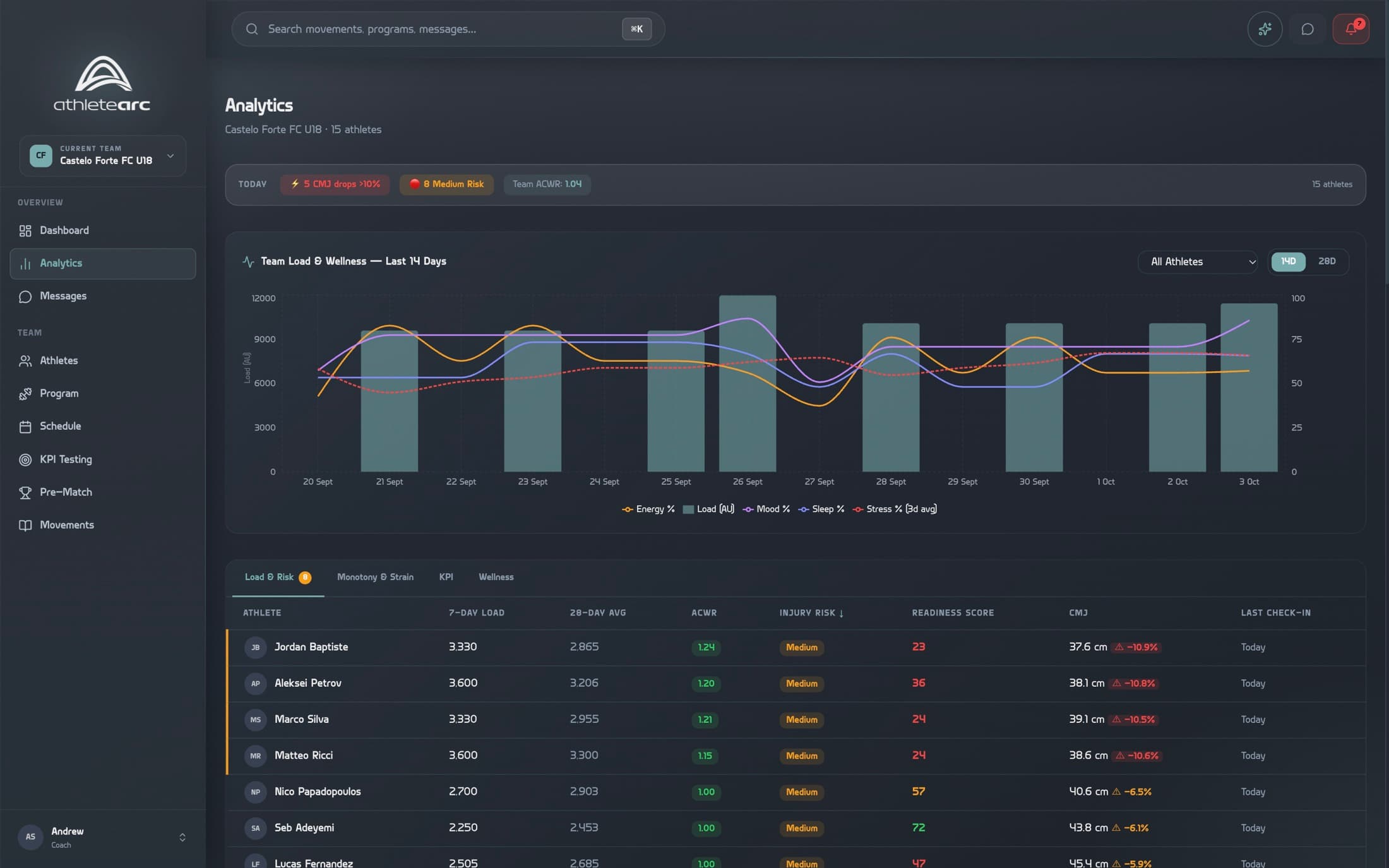
Daily squad load plotted against energy, mood, sleep and stress, with each athlete’s ACWR and injury-risk flag below.
Load, in context
Acute:chronic ratio
Last 7 days against the 28-day average, so spikes and drops in load stand out.
Monotony & strain
Flags weeks where load barely varies and recovery gets squeezed out.
Age-adjusted thresholds
Youth athletes are judged against thresholds for their age group, not an adult default.
Injury-risk flag
Low, medium or high — combining load with jump-height drops, soreness and left–right imbalances.
Jump-height drops
A drop of 5% or more against the four-week average flags possible neuromuscular fatigue.
Feeds the plan
Load and readiness go into Arc, which adjusts the next day’s session for the coach to review.
A flag, not a fortune teller
Load ratios are useful warning lights, and the science behind them is still debated. AthleteArc never presents a ratio as an injury prediction.
It puts load next to readiness, soreness, injury reports and jump-height changes, so coaches see the whole picture — and make the call.