Know who is ready before the session starts
A one-minute morning check-in turns sleep, mood, energy, soreness and stress into a readiness score out of 100. The evening check-in logs how hard the session was — and tomorrow adapts.
A wellness questionnaire athletes actually finish
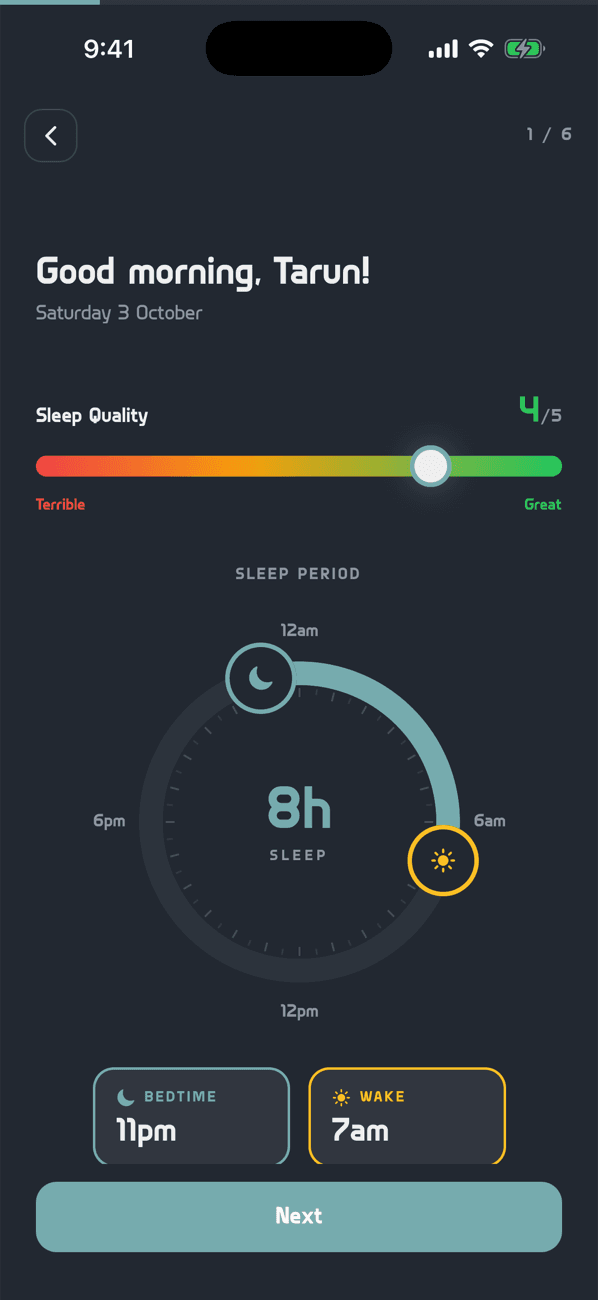
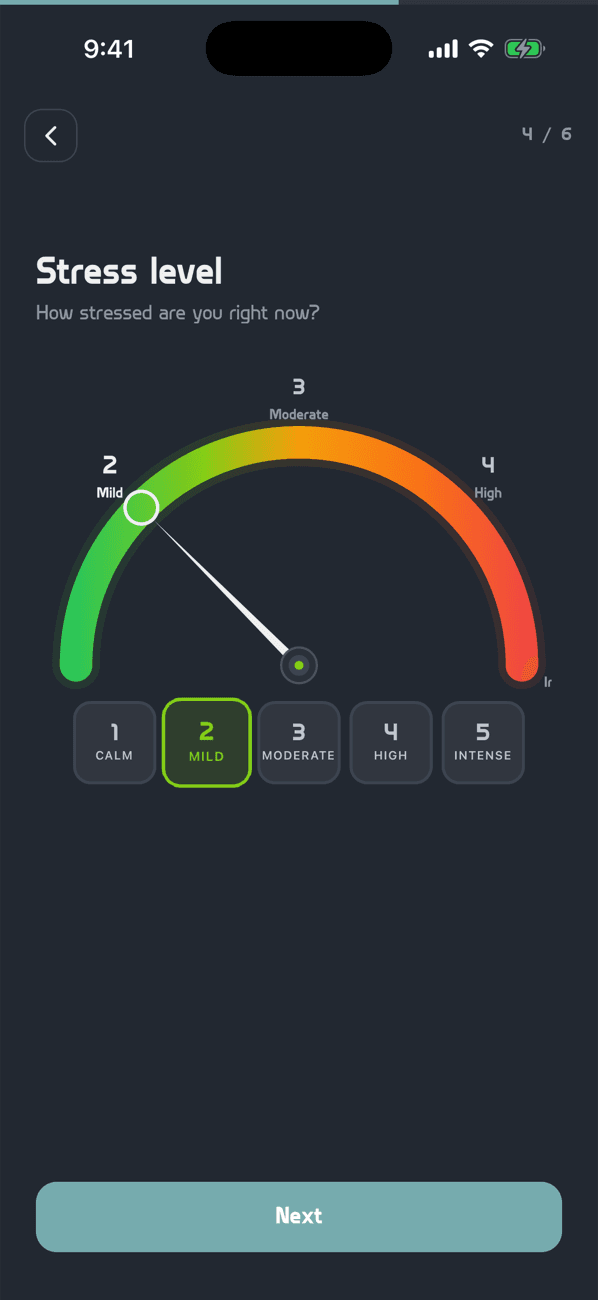
Six quick screens: sleep quality and the hours slept, how they feel, muscle heaviness, stress, and a body map for anything that feels off.
On match day it adds a mind check — how activated the player feels going into the game.
- Sliders and taps, no typing
- Sleep window set on a clock dial
- Tap the body map to flag soreness
- Streaks keep the habit going
One number, calculated — not self-rated
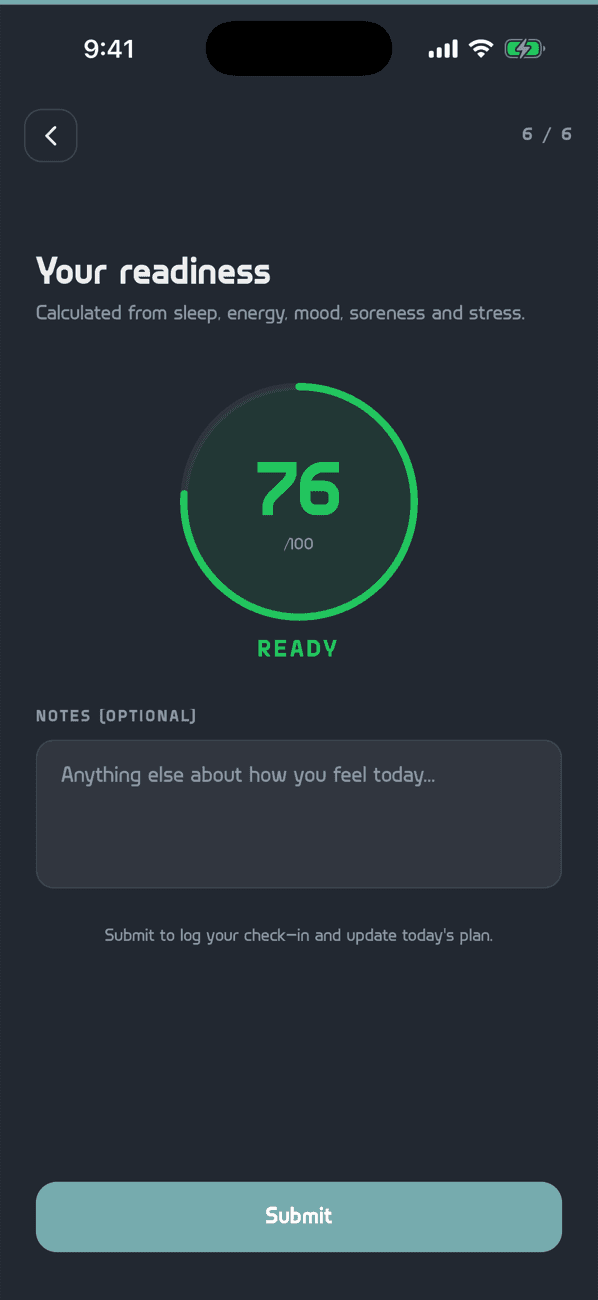
Players are bad at rating their own readiness. AthleteArc asks about the things they can judge — sleep, energy, mood, heaviness, stress, soreness — and calculates the score itself.
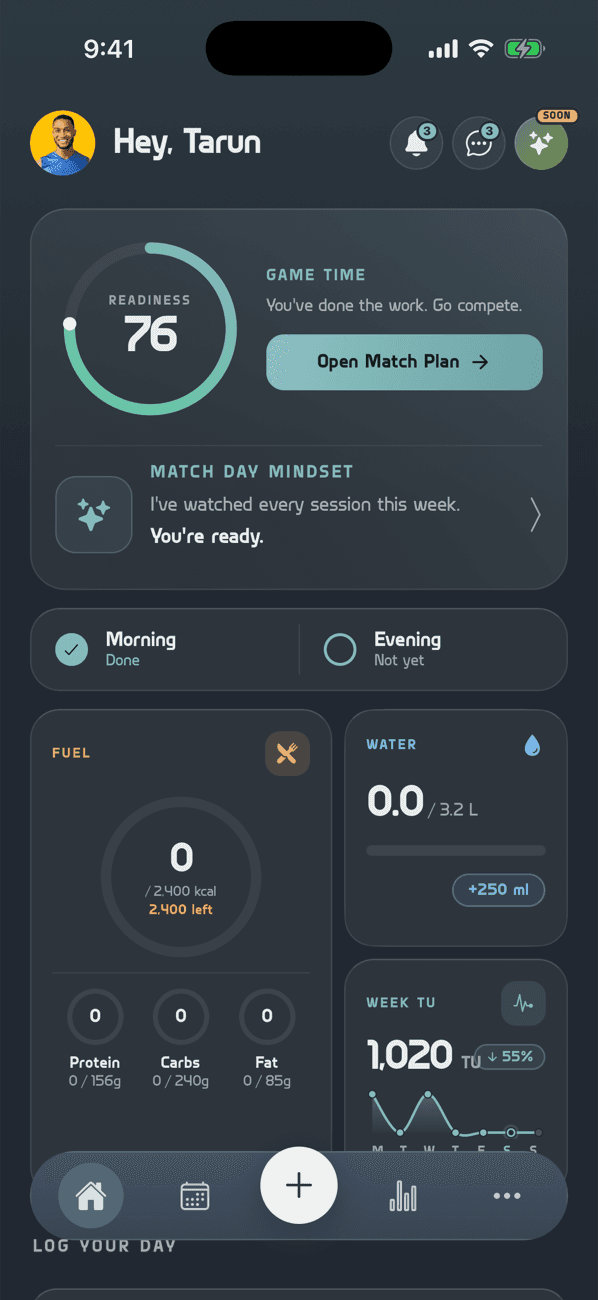
The result lands on the home screen as a readiness ring, alongside the day’s fuel, hydration and training load.
From check-in to tomorrow’s session
Morning: readiness
The check-in produces today’s readiness score and updates today’s plan.
Evening: session load
Players log how hard the session felt and how long it lasted. That becomes their training load.
Overnight: Arc adjusts
Readiness and load feed Arc, which adjusts the next day’s session. The coach can review and change anything.
Flag problems early, in the player’s own words
A stress gauge and a front-and-back body map make it easy for a player to say something is off without a conversation they might avoid.
Soreness feeds the readiness score; a reported injury goes further and changes which exercises Arc prescribes.
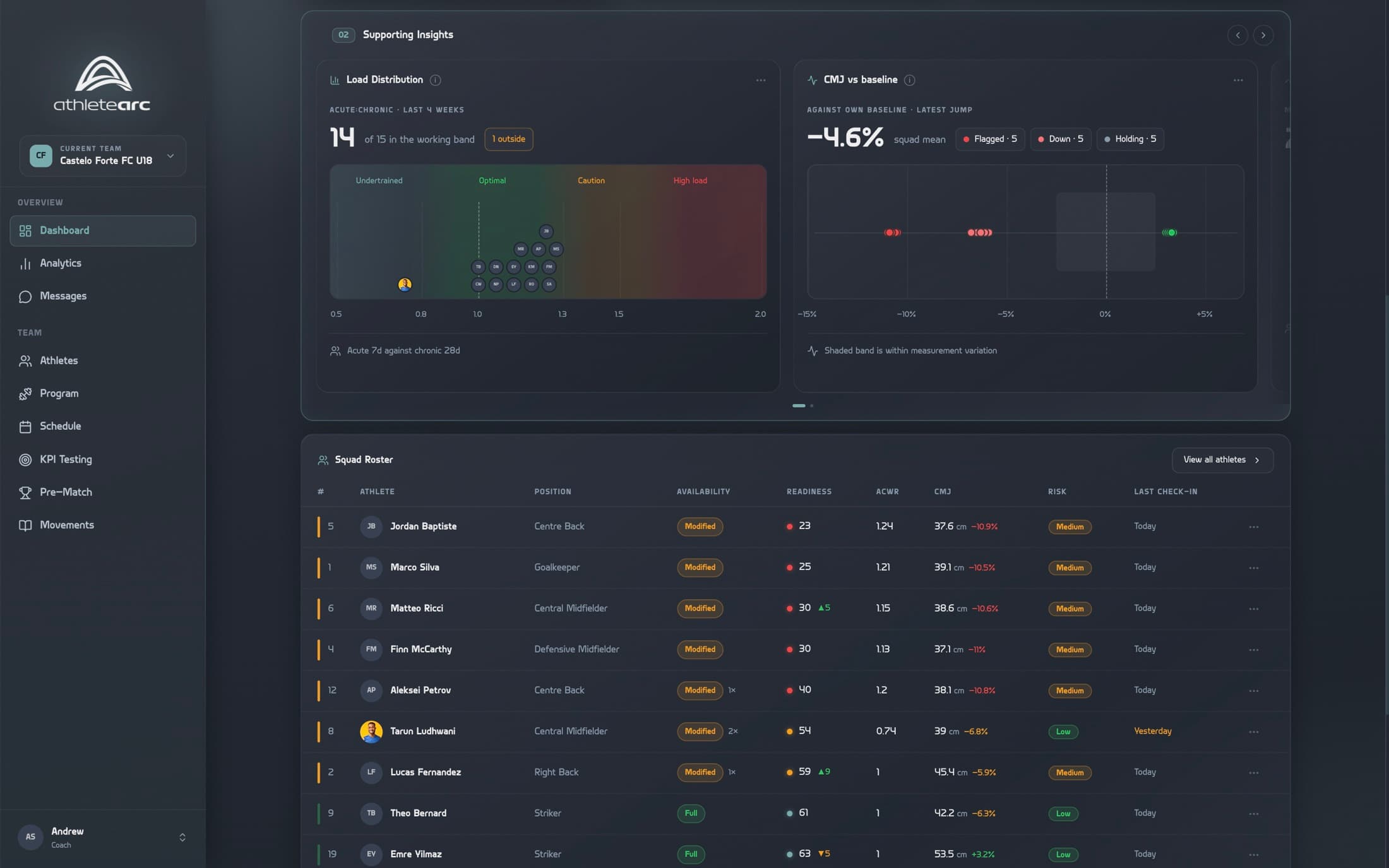
Every check-in, on one roster
Load distribution, jump change against baseline and the full squad roster with readiness, ACWR and risk.